RECIPES · 2026-08-10
From Jar to Table: When to Cook Kimchi Jjigae vs. Bokkeumbap
By Kimchee Curator
Age your kimchi on purpose: young kimchi for crunch, mid-age for stir-fry, well-ripened sour for jjigae that actually tastes like a restaurant.
TL;DR
Age your kimchi on purpose: young kimchi for crunch, mid-age for stir-fry, well-ripened sour for jjigae that actually tastes like a restaurant.
Not all kimchi in your fridge wants the same job. Week-one kimchi is still bright, lightly fizzy, and crisp — eat it as banchan, on tofu, or folded into a fresh bossam wrap where its crunch matters. Cooking it now dulls what makes it special.
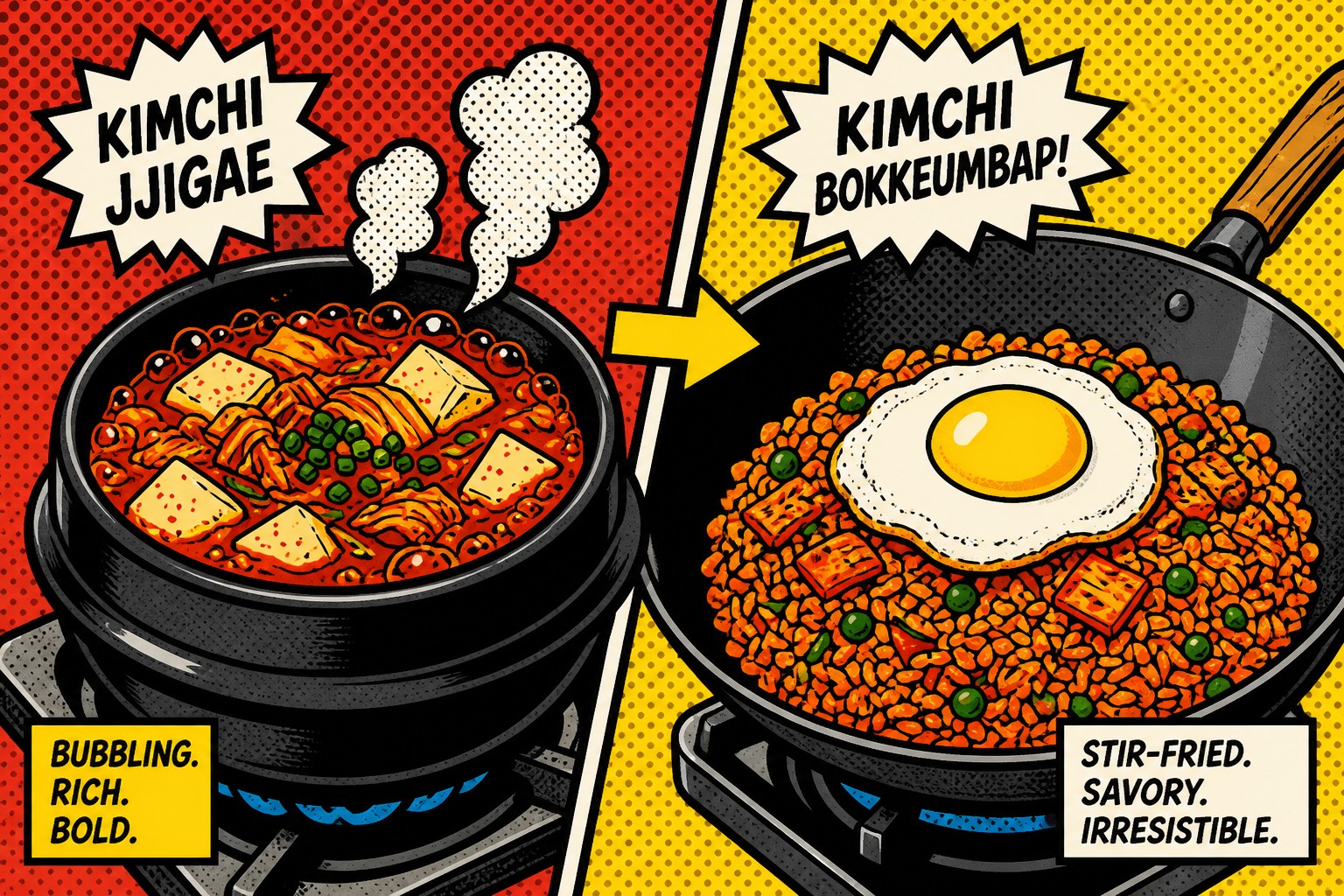
Days 10–21 are the stir-fry window. Acidity has risen enough to season rice without vinegar, but texture still holds. For kimchi bokkeumbap: render diced pork belly or spam, add well-squeezed chopped kimchi, let it sear until edges brown, then toss in day-old rice, kimchi juice, and a knob of butter. Finish with sesame oil and a fried egg — the sour keeps the fat from feeling heavy.
Three weeks and beyond is jjigae kimchi. The cabbage has softened, pH is low, and the brine is deeply savory. For kimchi jjigae: start with pork shoulder or belly, sauté kimchi until oil turns red, add anchovy-kelp stock plus kimchi brine (50/50), tofu, and a spoon of dwenjang if you like body. Simmer 25–35 minutes; do not rush it.
Build a pipeline on purpose. Make two jars at once and label by date; move one to the back of the fridge to age faster for cooking while you eat the fresher one. Restaurants do this with separate fridges — you can do it with placement and a marker.
Taste by function, not calendar. If the brine makes your mouth water and smells clean-sour like yogurt, it is ready for the pan. If it smells flat, sulfurous, or slimy, your salt or anaerobic conditions slipped — feed it to stock or compost and adjust next batch.
Across the Kimchee Network
More from the Kimchee Network