METHODS · 2026-08-13
Onggi and Modern Storage: Vessels That Breathe
By Kimchee Curator
From rooftop onggi to kimchi fridges and airtight boxes — how breathability, temperature, and gas exchange shape ferment.
TL;DR
From rooftop onggi to kimchi fridges and airtight boxes — how breathability, temperature, and gas exchange shape ferment.
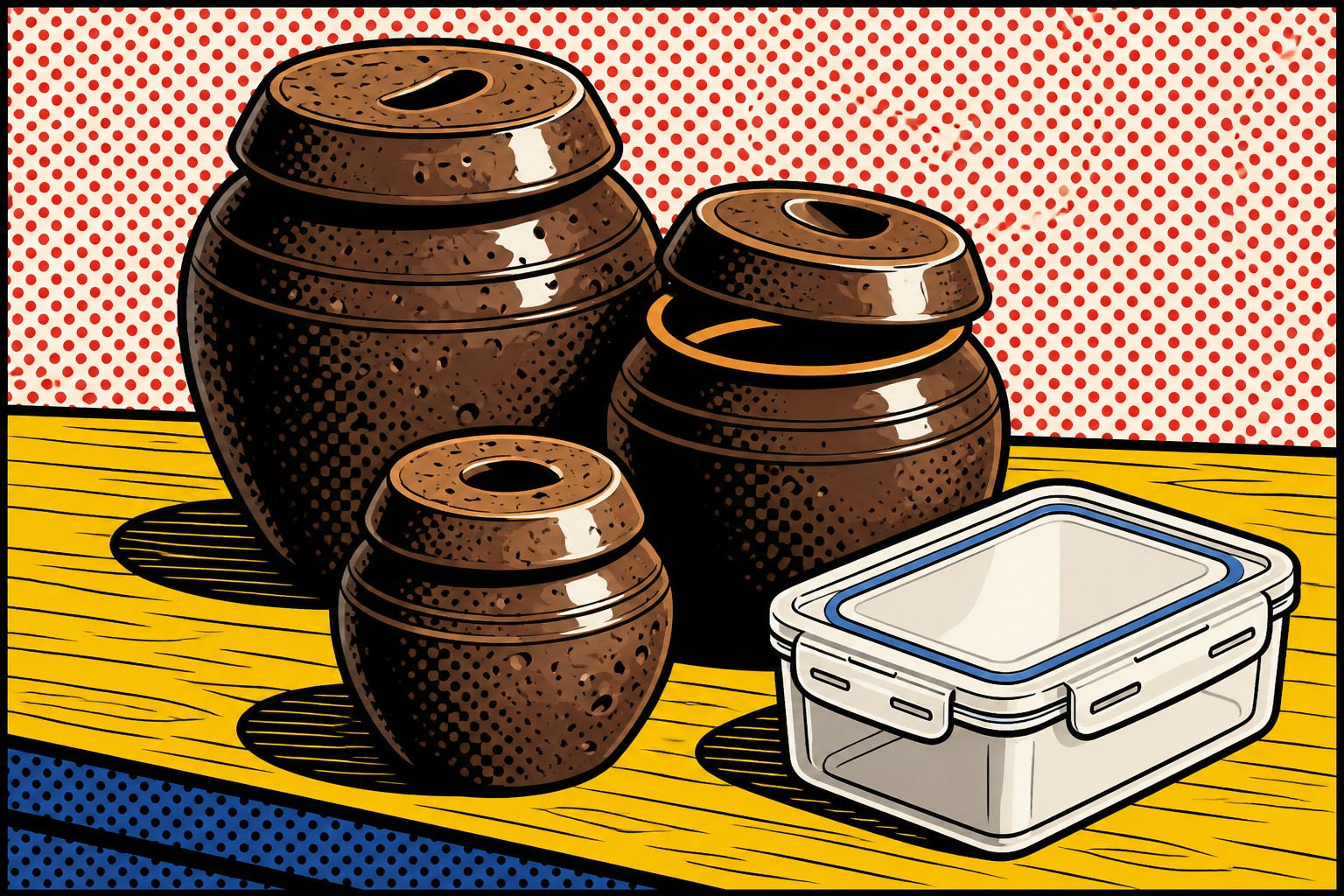
Onggi — the dark, unglazed earthenware crocks you see on rooftops — breathe at the microscopic level. Tiny pores let CO2 escape slowly while keeping dust out, and their thick walls buffer temperature swings. That is why onggi kimchi tastes rounder after a month than the same batch snapped shut in glass; slow gas exchange and thermal mass gentle the sour curve.
Modern kitchens substitute with two paths. Use a purpose-built kimchi container with inner press lid for daily banchan: it keeps solids submerged, reduces surface air, and stacks. Use glass jars for small batches if you monitor headspace and burp; use food-grade plastic only if it is truly airtight and odor-resistant, otherwise your fridge will wear kimchi perfume.
Enter the kimchi refrigerator: a Korean category unto itself. Operating at -1 to 35°F zones with humidity control and slow freeze-thaw cycles, it holds large batches at 33°F for months without freezing or drying. If you make more than 5 kg at a time, a secondhand kimchi fridge is the single best upgrade after a scale.
Weighting strategy matters more than container brand. Press kimchi under its own brine with a clean inner lid, a small plate, or a zip bag of brine (not water — a leaking water bag dilutes salinity). Any leaf poking above brine will oxidize and grow white yeast first; submerge everything.
Label and rotate. Mark date, salt %, and batch number with painter's tape; keep newest jars at the back. Open one jar at a time for table use and leave the others sealed — each opening introduces oxygen and slows long souring. Fermentation rewards closed doors.
Across the Kimchee Network
More from the Kimchee Network