RECIPES · 2026-08-15
Vegan Kimchi Without Jeotgal: Umami Without Fish Sauce
By Kimchee Curator
Fish-free kimchi can still be deep and savory — if you rebuild the umami with kelp, mushroom, and miso instead of just omitting.
TL;DR
Fish-free kimchi can still be deep and savory — if you rebuild the umami with kelp, mushroom, and miso instead of just omitting.
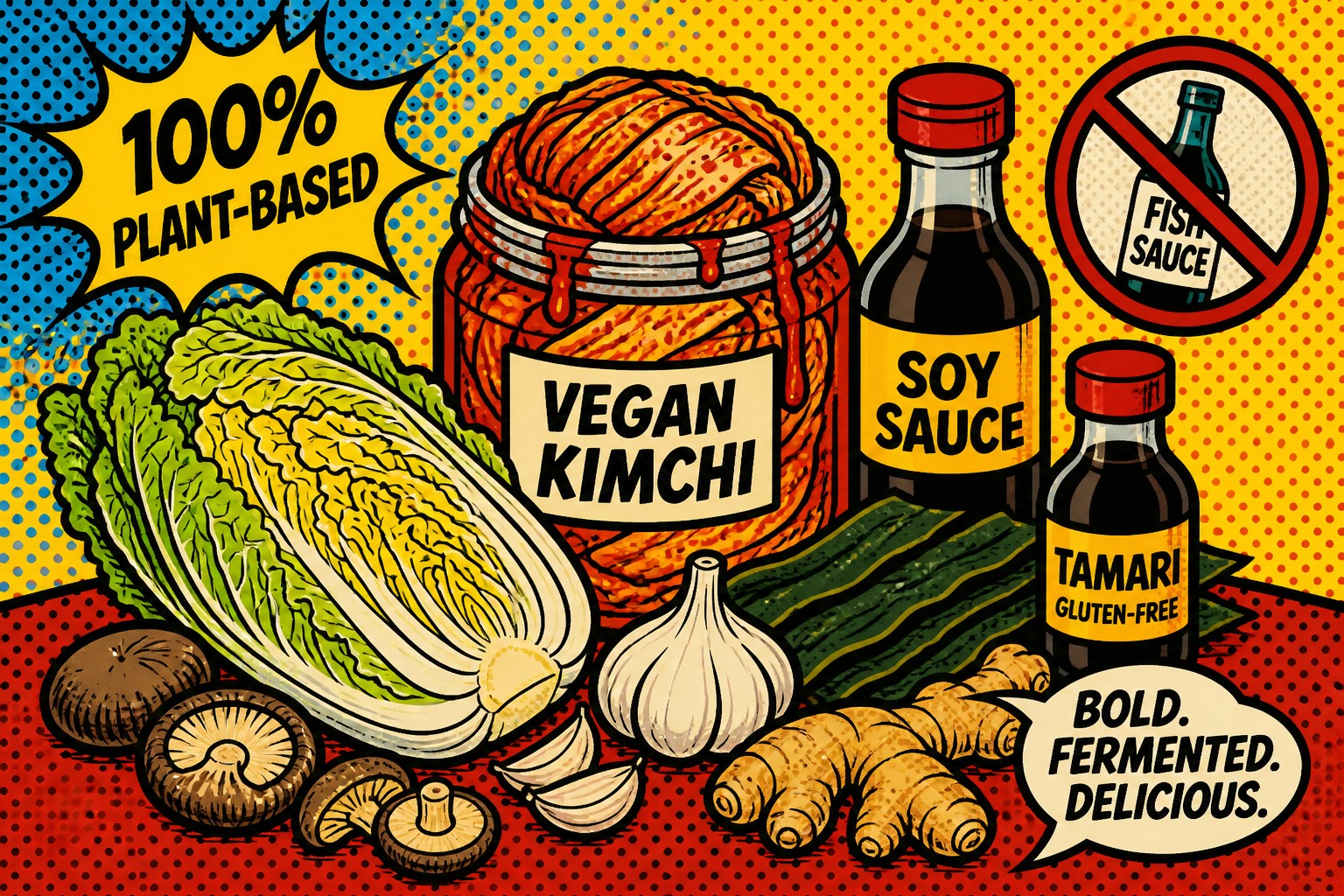
Removing saeujeot and aekjeot without replacing them gives bland kimchi. You need to rebuild umami from other glutamates: dried shiitake, kelp (dashima), doenjang or white miso, and a touch of mushroom soy. That quartet recreates the savory bass note fish sauce normally provides while keeping the ferment vegan.
Build a vegan umami paste. Simmer 10g dashima and 15g dried shiitake in 500 ml water for 20 minutes, reduce to 250 ml, cool, then blend with garlic, ginger, onion, pear, and 1 Tbsp white miso. The broth concentrates naturally occurring glutamates and nucleotides; the miso adds a fermented depth that plain salt cannot.
Add body with sticky rice or chapssal porridge. A thin porridge (1 Tbsp flour to 250 ml water) gives LAB a gentle sugar source and creates that slightly viscous brine that clings to leaves instead of pooling. It also softens the raw garlic edge during early fermentation.
Salt stays the same — 3% of vegetable weight — regardless of vegan status. Do not lower salt because you removed fish sauce; you still need that selectivity for LAB over spoilage bacteria. Taste the seasoning before packing: it should be salty enough that you want rice with it, not snackable like salad.
Expect a slightly faster sour at the same temperature because plant-only brines often have more available sugars. Check at 36 hours instead of 48 on your first vegan batch, refrigerate early if pH is dropping fast, and note that vegan kkakdugi (cubed radish kimchi) is the most forgiving place to start.
Across the Kimchee Network
More from the Kimchee Network