PANTRY · 2026-08-12
Gochugaru Guide: Coarse, Fine, and Sun-Dried Flavor
By Kimchee Curator
Not all chili flakes are equal. How cultivation, drying, and grind size change heat, color, and kimchi texture.
TL;DR
Not all chili flakes are equal. How cultivation, drying, and grind size change heat, color, and kimchi texture.
Gochugaru makes kimchi read as kimchi. Korean peppers are capsicum annuum selected for color (astaxanthin), smoky sweetness, and moderate heat (1,000–5,000 Scoville), not raw burn. Chinese or generic chili flakes substitute in heat but not in aroma — use Korean flakes when color and fruity depth matter.
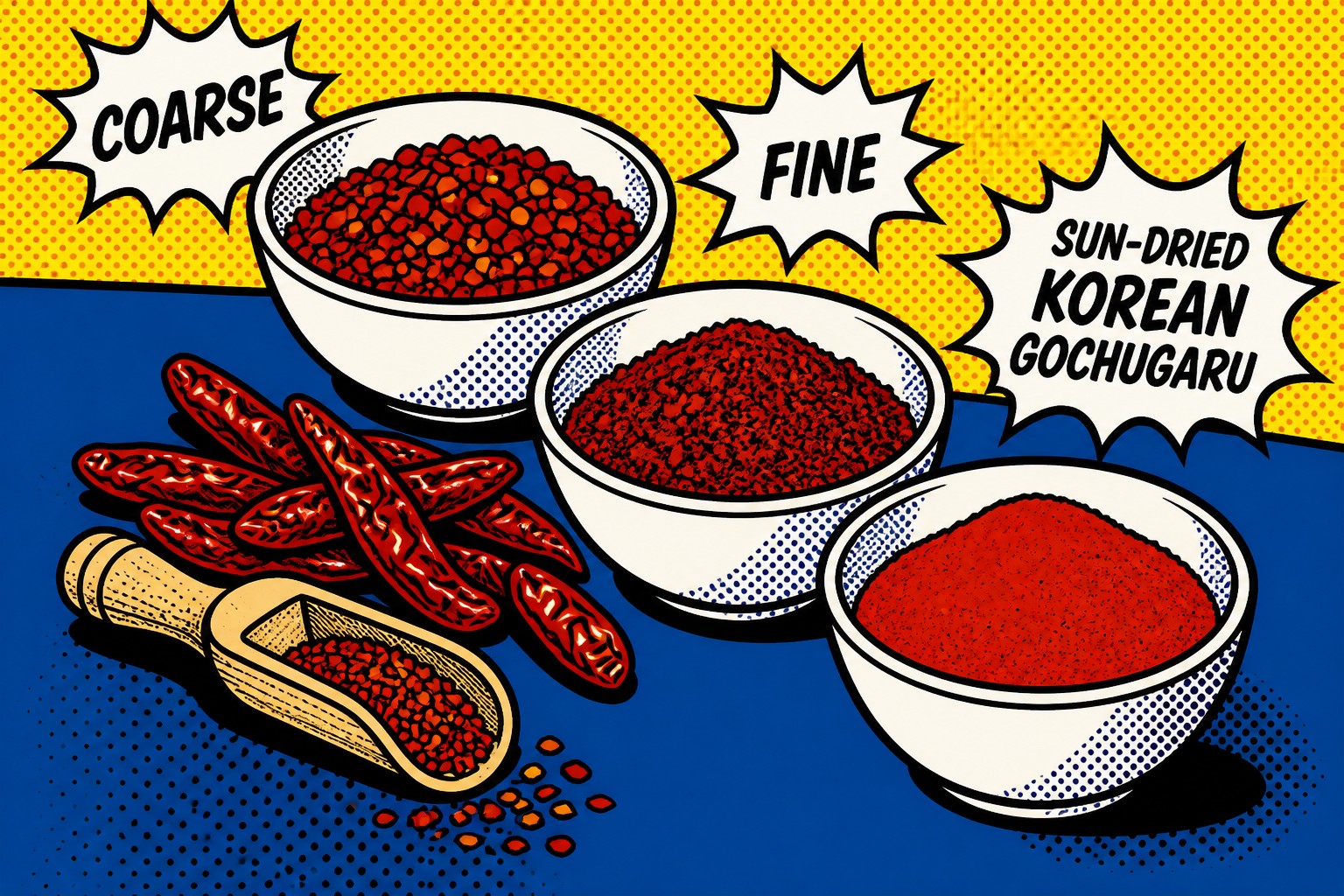
Grind dictates texture and bitterness. Coarse (gutge) flakes give ruby color and that classic granular bite between cabbage leaves; medium builds body; fine powder dissolves into sauces and pretends to be gochujang. For napa kimchi, blend 70% medium-coarse and 30% fine for color that sticks and heat that distributes.
Drying method matters. Tae-yang-cho (sun-dried) peppers develop deeper sweetness and a slightly leathery aroma versus machine-dried, which is brighter and sharper. After grinding, good gochugaru smells like dried fruit and tobacco, not dust. Freeze a bulk bag and decant a small jar to the pantry to slow oxidation.
Heat labels are inconsistent. Look for vendor notes like 'mild,' 'medium,' or 'cheongyang pepper blended' and taste a pinch raw before scaling a batch. A spoon of plum extract or pear puree can buffer excess heat without adding sugar the way plain sugar does.
Store like tea: airtight, dark, cool. Gochugaru fades to brick-brown in months at room temp; frozen flakes stay scarlet for a year. If your kimchi looks brown instead of red after a week, your flakes were old or your bloom time was too short — bloom 10 minutes in the liquid part of your seasoning before mixing.
Across the Kimchee Network
More from the Kimchee Network