CULTURE · 2026-08-14
Regional Kimchi Map: Jeolla, Gyeongsang, and Northern Styles
By Kimchee Curator
One country, dozens of kimchis: how Jeolla generosity, Gyeongsang salt, and northern lightness map onto cabbage itself.
TL;DR
One country, dozens of kimchis: how Jeolla generosity, Gyeongsang salt, and northern lightness map onto cabbage itself.
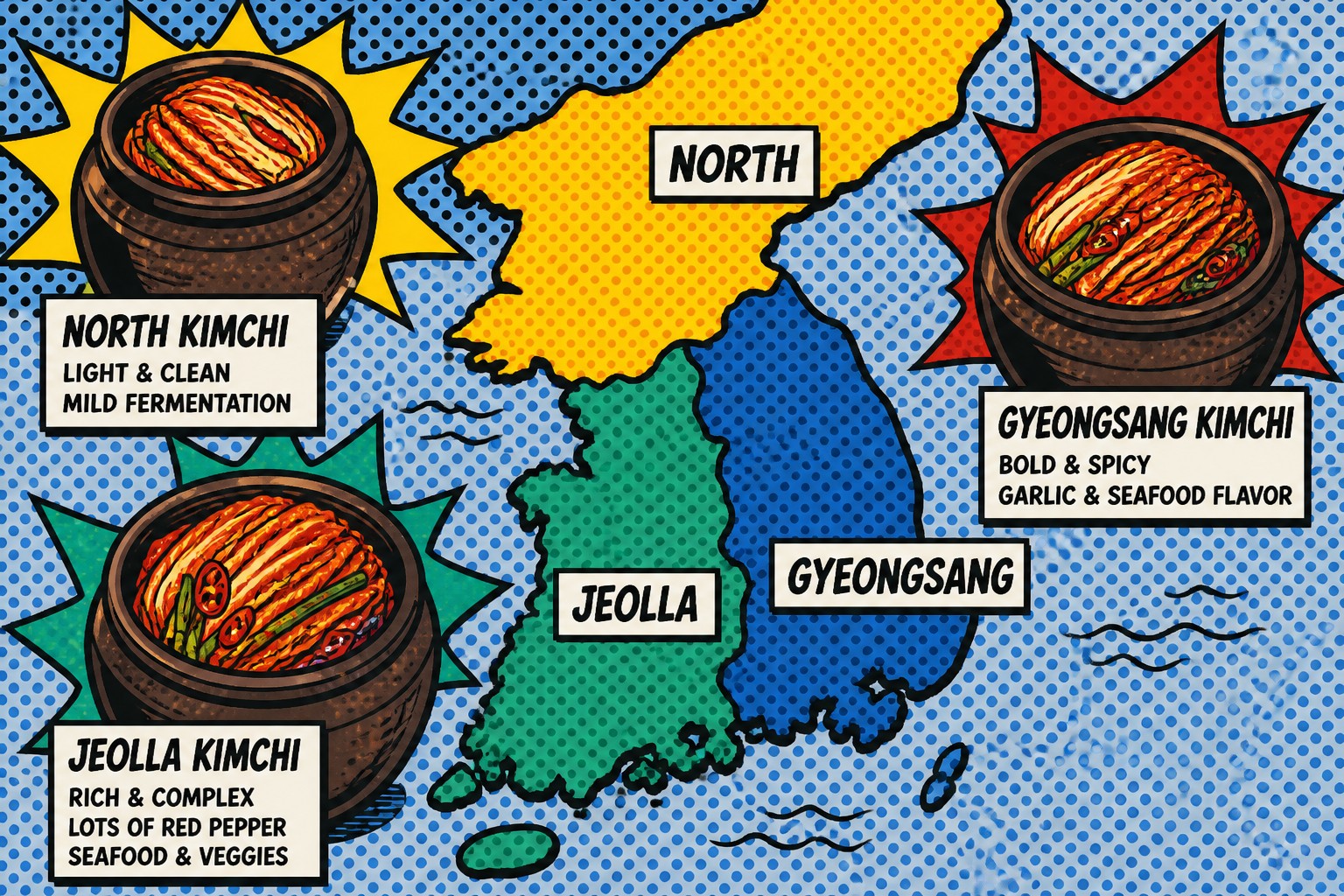
Korean kimchi is not one recipe — it is a dialect map. Jeolla-do kimchi is famously generous and jeotgal-forward, layering salted shrimp, myeolchi-aekjeot, and often fresh oysters with abundant garlic; the result is deeply savory and keeps long, built for banquet tables that never lacked side dishes.
Gyeongsang-do kimchi reads saltier and tighter, with less sugar and often a sharper garlic note — frugal, dry-packed, and designed to travel well and stay crisp in mountain winters. You will find more flat-leaf mustard kimchi and dialed-down pear sweetness compared with Jeolla's sweetness.
Northern kimchi (Pyongyang, Hamgyeong traditions) is lighter still: less gochugaru, more dongchimi and baek-kimchi logic, often with pine nuts and less jeotgal, and a clear brine you could also drink as soup. It reflects colder storage and a palace-mandated restraint on heavy spice that predates modern chili entirely.
Jeju and coastal villages add their own — abalone, sea urchin roe, or seaweed — not as gimmicks but as preservation of what was abundant. Each village's kimchi is an answer to local salt, local water hardness, and local winter length, not a branding exercise.
Use the map as a shopping and cooking guide. If your local HMart has a Jeolla-branded kimchi, expect richer jeotgal funk and more brine; Gyeongsang or Seoul-style will taste cleaner and crisper. Try one from each region side-by-side with white rice and you will understand regional Korean cooking better than any single recipe can teach.
Across the Kimchee Network
More from the Kimchee Network