FERMENTATION · 2026-08-08
Small-Batch Napa Kimchi: Salt, Time, and Gochugaru
By Kimchee Curator
A complete 4-day napa kimchi method — salting ratios, seasoning paste, and how to taste for the right sour.
TL;DR
A complete 4-day napa kimchi method — salting ratios, seasoning paste, and how to taste for the right sour.
Napa kimchi starts with salt, not spice. Halve two medium baechu, salt each leaf layer with coarse sea salt at roughly 3–4% of cabbage weight, and let osmosis do 6–8 hours of work. Rinse twice, drain 60–90 minutes — the cabbage should bend without snapping but still have a crisp core; that water management is what prevents a soupy jar later.
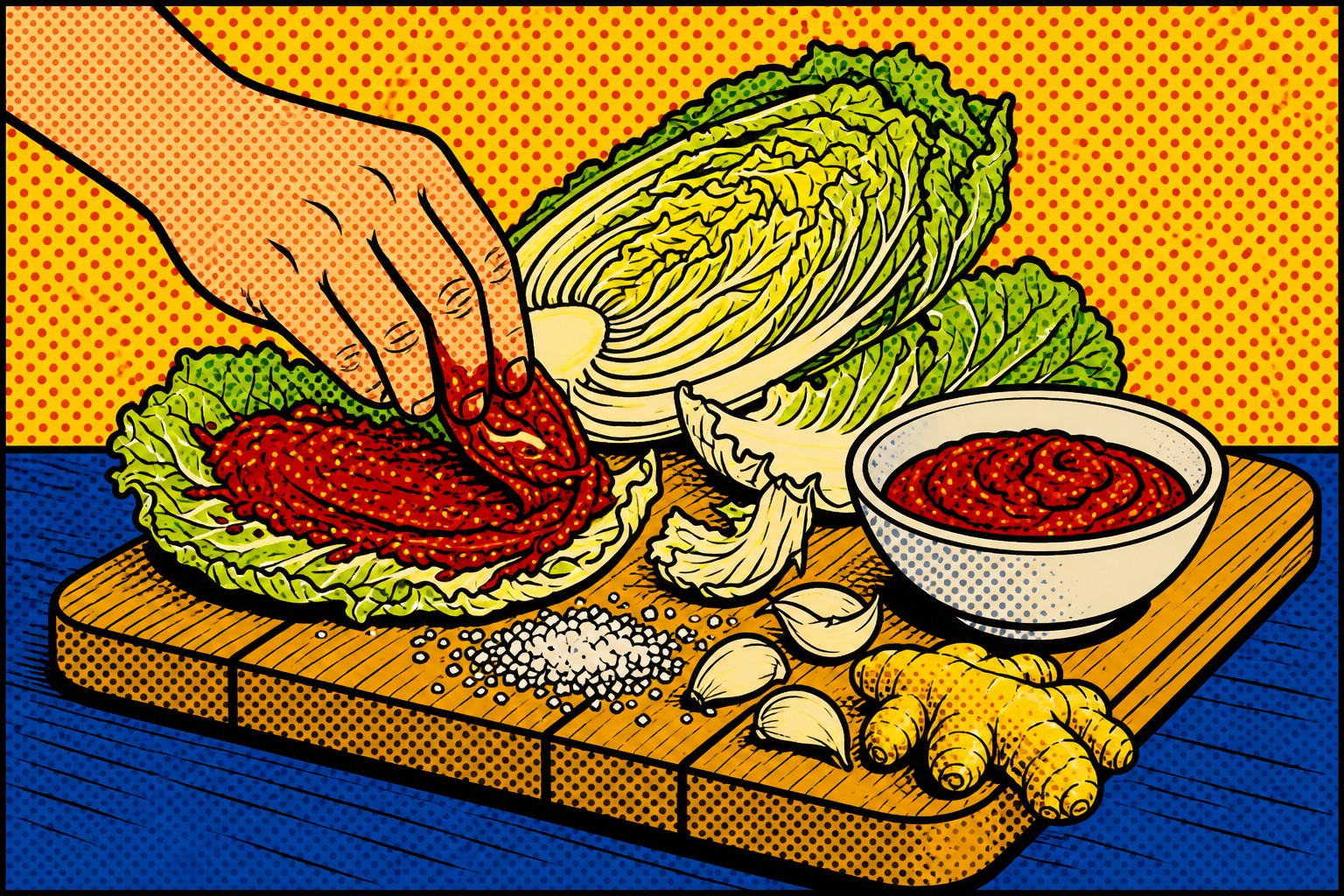
The seasoning paste is where gochugaru matters. Medium-coarse flakes give color and texture; fine powder adds heat but can turn bitter if you overdo it. A typical small batch: 1 cup gochugaru, 1/4 cup saeujeot (salted shrimp) or 3% salt brine for vegan, 2 Tbsp fish sauce, pureed onion-pear-garlic-ginger, and optional fresh oysters or plum syrup. Taste the paste raw — it should be salty-savory first, spicy second.
Pack without air pockets. Layer cabbage leaves, spread paste between every leaf, press firmly into a clean jar or onggi leaving 20% headspace for gas. Ferment at 62–68°F for 36–72 hours until you hear a gentle fizz and the brine tastes lively, then move to 35–39°F. The magic sour develops slowly in the fridge over days 3–7.
Salt is your safety net. Below 2% salt-to-vegetable, kimchi softens and spoils; above 5% it ferments sluggishly and stays too salty. Use a kitchen scale, not volume cups, and log your ratio each batch. You are farming lactobacillus, not guessing.
Serve young kimchi (3–5 days) for crisp banchan and fresher crunch; serve 2–3 week kimchi for jjigae and bokkeumbap where deeper acidity cuts pork fat. Reserve the brine — it is a ready-made soup base and a natural starter for your next batch of kkakdugi.
Across the Kimchee Network
More from the Kimchee Network